Fishing Conditions Guide
The Fishing Conditions Guide is designed to help anglers make more informed decisions before heading out on the water. By combining weather information, marine forecasts, moon phase data, seasonal species calendars, and location-specific fishing conditions, this page provides a convenient starting point for planning fishing trips across Texas, Louisiana, and Florida.
Whether you’re targeting speckled trout on a shallow flat, chasing redfish along marsh shorelines, or running offshore in search of pelagic species, understanding current conditions is one of the most important factors in a successful day on the water. Wind direction, wave height, tides, seasonal migrations, water temperature, and moon phases can all influence fish behavior and overall fishing opportunities.
The information presented here is intended as a planning guide only and should never be considered a guarantee of fishing success or safe boating conditions. Fish movement, weather patterns, water clarity, and local environmental factors can change rapidly and often vary significantly from one location to another.
Marine conditions can deteriorate quickly, especially in the Gulf of Mexico. Forecasts should always be verified through official weather and marine forecasting agencies before launching a boat or fishing from exposed shorelines, jetties, or offshore structures. Weather updates, small craft advisories, thunderstorms, lightning, and changing sea states should always be monitored throughout your trip.
Above all else, safety should always come first. No fishing trip is worth risking your safety, your crew, or your vessel. Always wear appropriate safety equipment, check local regulations, carry required emergency gear, and make decisions based on current conditions rather than a fishing forecast alone.
Use this guide as a tool to help plan your next adventure—but always verify conditions locally and make safety your highest priority on the water.
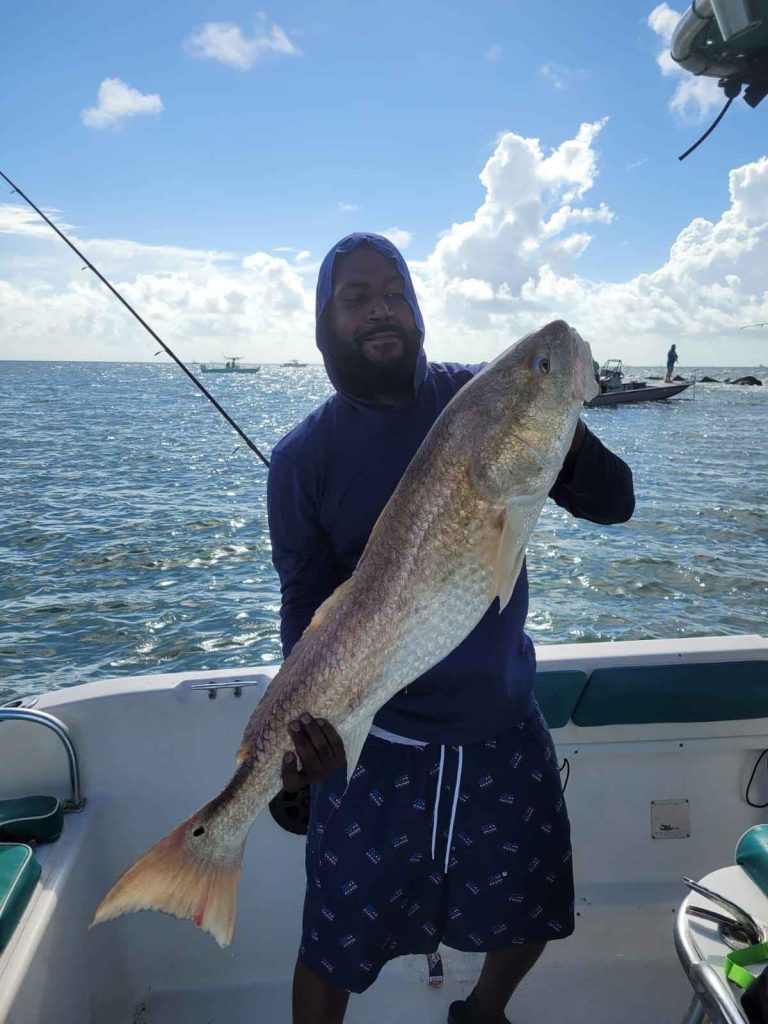
The Del Agua Fishing Research Project
Built by Anglers. Driven by Data. Open to Everyone.
Every year, recreational anglers spend millions of hours on the water observing fish behaviour.
They learn how fish respond to changing weather, tides, moon phases, seasons, wave conditions, water temperatures, bait movements, and countless other environmental factors. Collectively, anglers possess an incredible amount of knowledge—but very little of it is ever preserved.
Most fishing trips disappear the moment they’re over, taking with them observations that could improve our understanding of fish behaviour, strengthen environmental research, and help other anglers make better decisions on the water.
The Del Agua Fishing Research Project was created to change that.
Our goal is to build one of the largest anonymous recreational fisheries datasets available by combining recreational fishing observations with archived environmental conditions. By bringing together thousands of fishing trips from anglers across different regions, seasons, and environmental conditions, we’re developing free tools that help explain why fish behave the way they do—not simply where they were caught.
This is a long-term citizen science initiative that combines recreational fishing, environmental science, ecological modelling, and data analysis to improve our understanding of recreational fisheries while ensuring the knowledge remains freely available to everyone.
Why This Matters
Every angler has wondered:
- Why were the fish biting yesterday but not today?
- Does moon phase really matter?
- Is the incoming tide better than the outgoing tide?
- Which environmental conditions consistently produce successful fishing?
- How do different species respond to changing weather?
- Can fishing success be predicted more accurately?
No single angler fishes enough locations, seasons, or conditions to answer these questions alone.
But together, thousands of anglers can.
Every fishing trip contributes another piece of a much larger puzzle. As the dataset grows, we can identify patterns that individual anglers would never be able to see on their own, helping improve fishing predictions while contributing to a better scientific understanding of recreational fisheries.
A Different Approach
Most fishing apps focus on helping you record your catches.
This project goes one step further.
Every fishing trip has the potential to become an anonymous scientific observation, automatically paired with archived environmental conditions from the time of your trip.
Instead of simply recording what was caught, we’re building a system that helps explain why those catches happened.
Over time, these observations will support free fishing tools, environmental analyses, educational resources, and long-term fisheries research—all built using contributions from the recreational fishing community.
Your Fishing Log. Your Data.
The Del Agua Fishing Logbook was built around one simple principle:
Your fishing data belongs to you.
Every fishing trip you record is stored as your own private fishing journal.
Your catches.
Your notes.
Your fishing locations.
Your memories.
Everything remains private.
Only you can access your fishing journal.
Even the Del Agua team cannot view your private fishing logs.
Whether you’re protecting a favourite fishing spot, keeping track of productive patterns, or simply recording memorable days on the water, your journal remains exactly what it should be:
Your journal. Your knowledge. Your data.
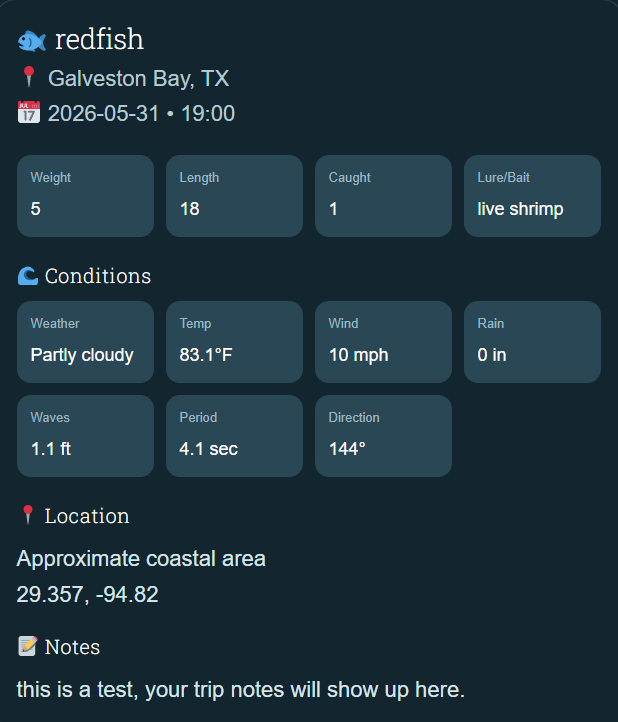
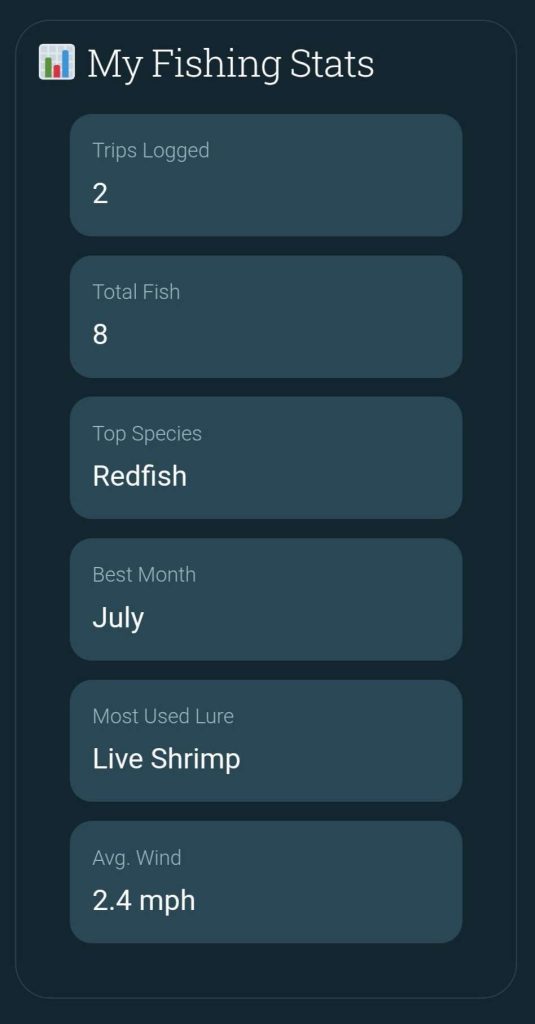
Fish Anywhere — Even Offline
Fishing doesn’t always happen where there’s reliable cell service.
The Del Agua Fishing Logbook can be installed directly to your phone using your browser’s “Add to Home Screen” feature.
Once installed, it works much like a dedicated mobile app.
You can continue logging fishing trips even when you’re offline or completely outside cellular coverage.
Your fishing logs are safely stored on your device and automatically synchronize with your account the next time you’re connected to the internet.
Whether you’re fishing remote marshes, offshore, on the beach, or miles from the nearest signal, your fishing journal is always available when you need it.
Research Participation is Always Optional
The Del Agua Fishing Research Project is entirely opt in.
When saving a fishing trip, you’ll have the option to contribute that individual trip to the research project.
Participation is completely voluntary.
You decide trip by trip whether you would like to contribute.
If you choose not to participate:
- Your fishing journal remains completely private.
- Nothing from that trip is added to the research database.
- You still have access to every feature of the fishing logbook.
Nothing changes.
What Happens If I Choose to Contribute?
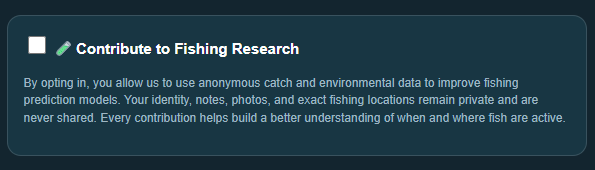
If you choose to participate, the system creates an anonymous research record for that individual fishing trip.
Importantly, this is not a copy of your fishing journal.
Your personal fishing log remains private within your account.
Instead, only the information needed for scientific analysis is extracted into a completely separate research database.
The research database never includes:
- Your name
- Your email address
- Your account information
- Your private fishing journal
- Your private notes
- Your photographs
- Your exact fishing locations
Your fishing journal always remains private.
Only anonymous catch and environmental information is used for research.
What Information Is Used for Research?
Depending on the information available, an anonymous research record may include:
Catch Information
- Species caught
- Number caught
- Length (if provided)
- Weight (if provided)
- Bait or lure
- Date and approximate time
- Generalized location information (never your exact fishing spot)
Automatically Archived Environmental Conditions
- Weather
- Air temperature
- Wind speed
- Wind direction
- Rainfall
- Wave height
- Wave period
- Wave direction
- Moon phase
- Moon illumination
- Moon age
- Tide stage
- Environmental prediction snapshot
Most environmental information is collected automatically, allowing anglers to contribute research-quality environmental observations without manually recording every environmental variable themselves.
What Will the Data Be Used For?
As the dataset grows, anonymous observations will help answer questions such as:
- Which environmental conditions consistently produce successful fishing?
- Which variables matter most for different species?
- How do fish respond to changing weather?
- How important are tides compared to moon phase?
- How can environmental fishing predictions be improved?
- Are environmental relationships transferable between different coastal regions?
The long-term goal is to transform thousands of individual fishing trips into a better understanding of recreational fisheries while creating practical tools that anglers can use every day.
Sharing What We Learn
As the project grows, we’ll publish free summaries and interactive analyses based entirely on anonymous, combined observations.
These may include:
- Species composition
- Seasonal catch trends
- Catch success by month
- Catch success by moon phase
- Catch success by tide stage
- Catch versus wind speed
- Catch versus wind direction
- Catch versus weather
- Catch versus wave conditions
- Environmental importance rankings
- Prediction accuracy
- Interactive maps
- Long-term environmental trends
No individual catches, fishing journals, notes, photographs, or exact fishing locations will ever be published.
Current Progress
The Del Agua Fishing Research Project is continually growing.
Our research dashboard tracks:
- Fishing trips contributed
- Fish recorded
- Species documented
- Environmental observations collected
- States represented
- Active contributors
- Prediction accuracy
- Research analyses completed
As more anglers participate, the models become stronger, the analyses become more reliable, and the tools become more valuable for everyone.
Help Build Something Bigger
Every fishing trip tells a story.
Thousands of fishing trips reveal patterns.
Whether you fish every weekend or only a few times each year, your observations can help build a better understanding of recreational fisheries while remaining completely under your control.
You can simply use the Del Agua Fishing Logbook as your own private fishing journal.
Or, if you choose, you can anonymously contribute individual trips to help improve free fishing tools, environmental analyses, and long-term fisheries research for the recreational fishing community.
The choice is always yours.
Your data stays yours.
Your privacy comes first.
Together, we can build better fishing knowledge—one fishing trip at a time.