Category: Rod Education

  • Carbon Fiber Grips vs Cork Fishing Rod Handles: Which Is Better?

    Choosing the right fishing rod grip can completely change how a rod feels on the water. Two of the most popular handle materials used on modern fishing rods are cork and carbon fiber. Both offer unique advantages, but they perform very differently depending on fishing style, environment, and personal preference.

    For many anglers, the choice comes down to feel, sensitivity, durability, and aesthetics.
    What Are Cork Fishing Rod Grips?

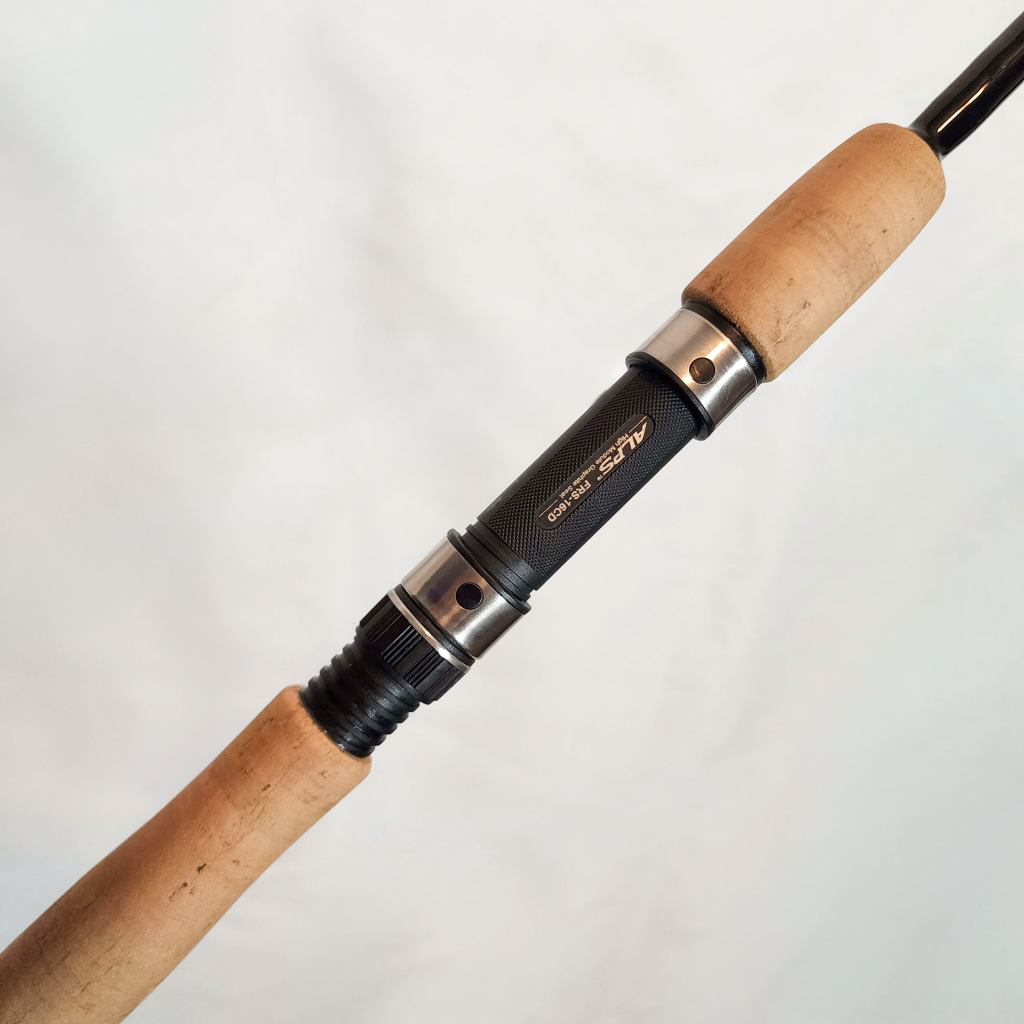
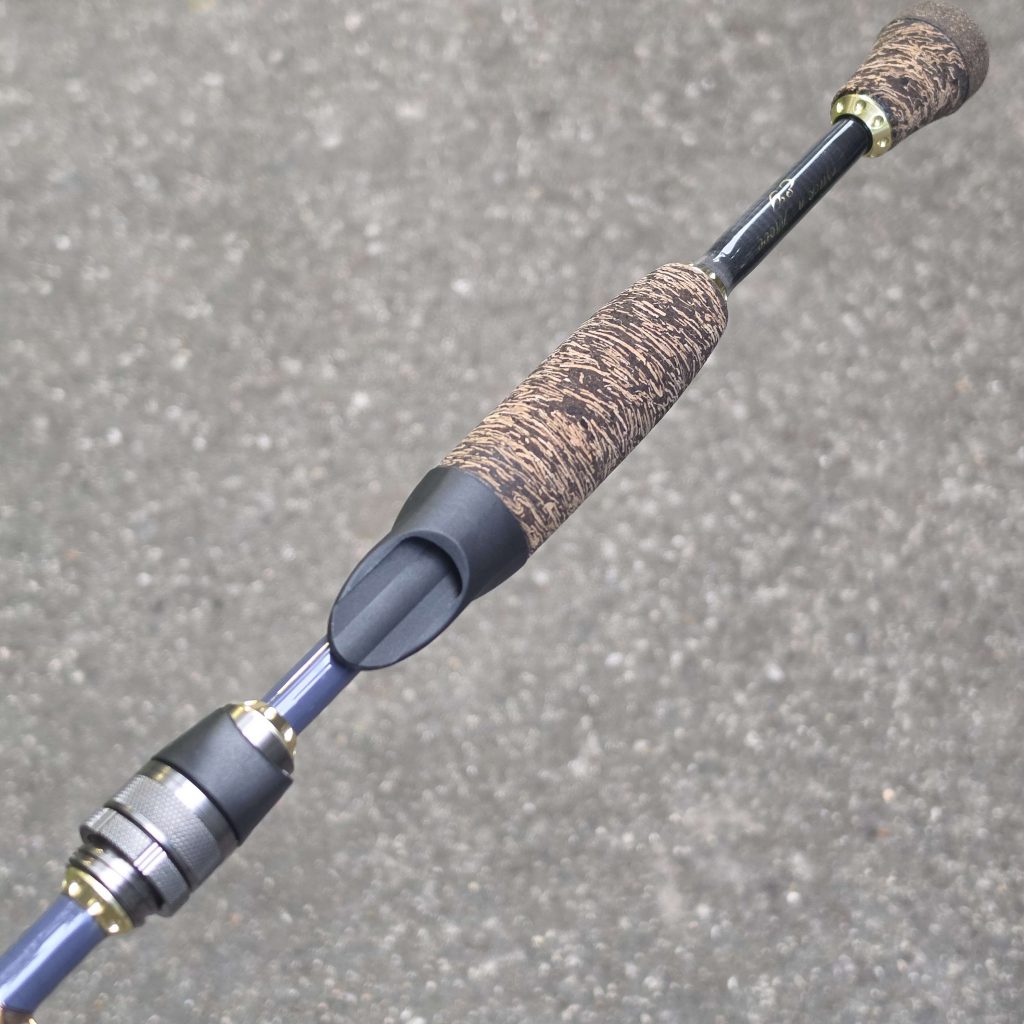
    Cork has been used on fishing rods for generations and remains one of the most recognizable grip materials in fishing. It is lightweight, naturally textured, and known for its comfortable feel in the hand.

    Many anglers prefer cork because it feels warm and natural while fishing. High-quality cork also provides excellent sensitivity, allowing vibrations from lure movement, structure, and subtle bites to transfer through the rod effectively. This is one reason cork remains popular on freshwater rods, finesse setups, fly rods, and traditional custom builds.

    Cork also has a timeless appearance that many anglers associate with premium fishing rods and classic craftsmanship.

    What Are Carbon Fiber Fishing Rod Grips?

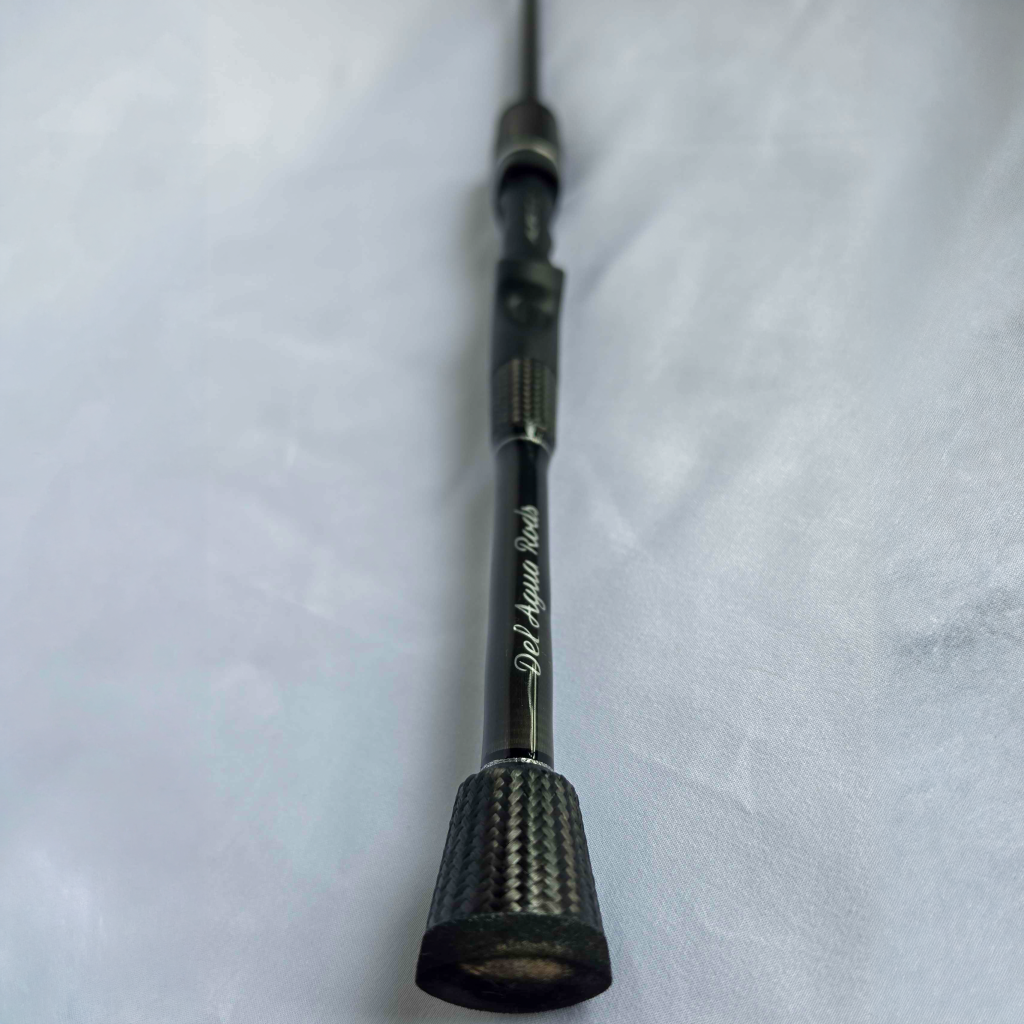
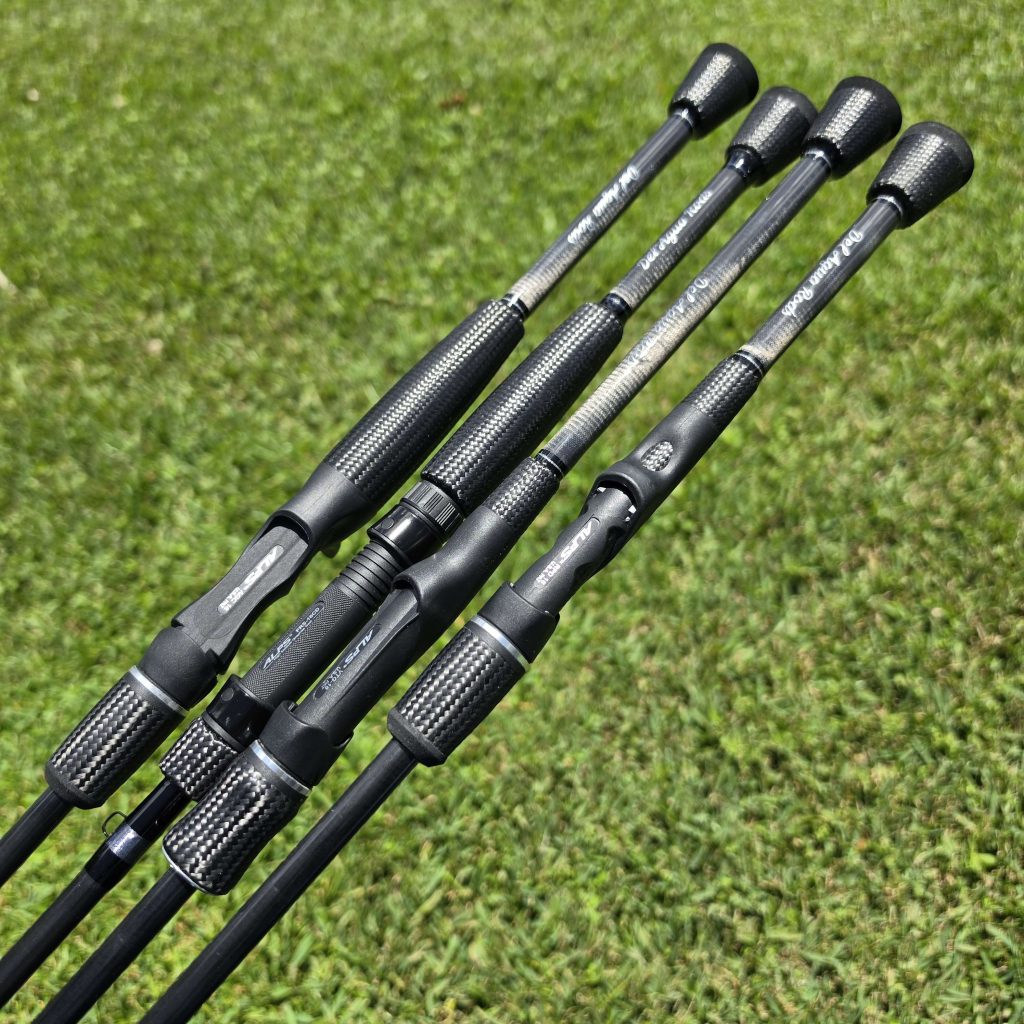
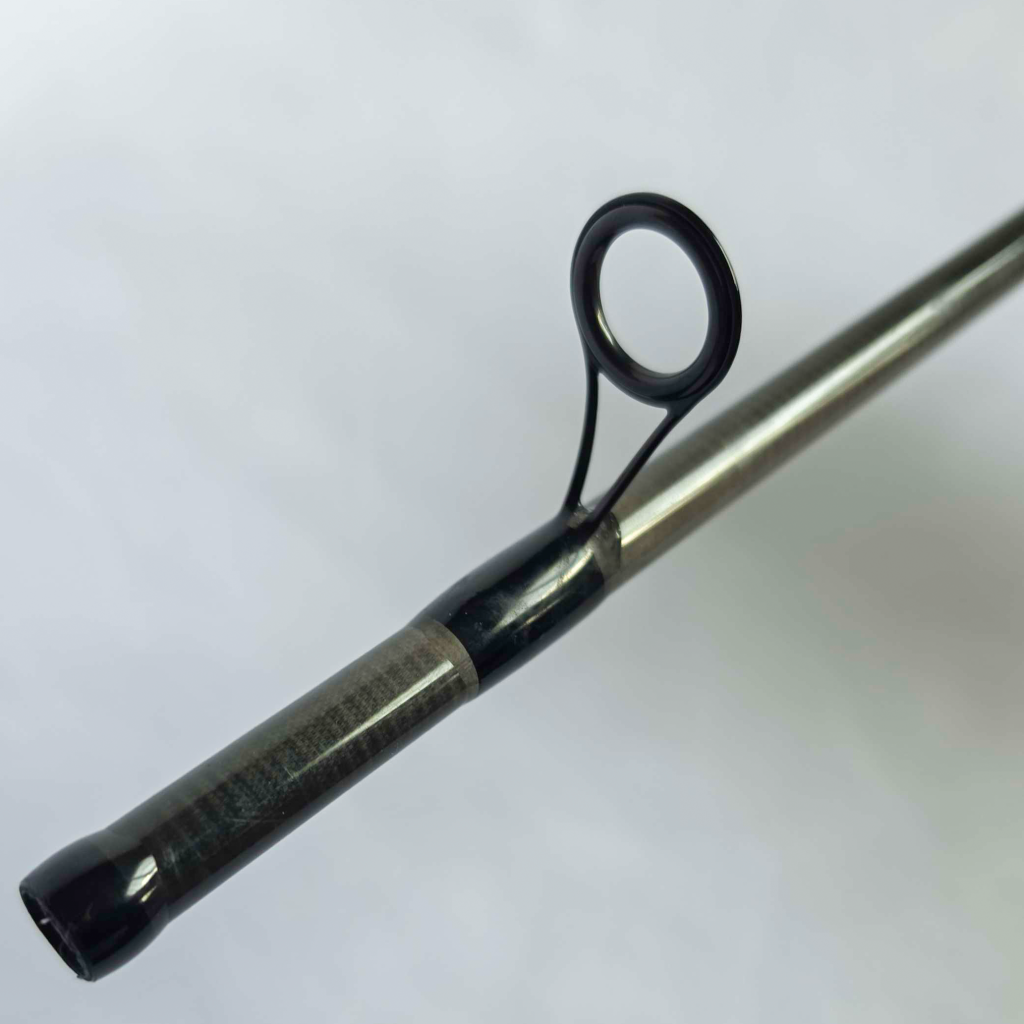
    Carbon fiber grips are a newer and increasingly popular option found on many modern custom fishing rods. Unlike cork, carbon fiber uses rigid composite materials designed to maximize durability and responsiveness.

    Many anglers describe carbon fiber grips as feeling more direct and connected to the rod blank. Because the material is rigid and does not compress as much as cork, vibrations transfer more sharply into the hand. This can make the rod feel extremely responsive when fishing artificial lures or working bottom-contact presentations.

    Carbon fiber grips are especially common on inshore rods, BFS setups, travel rods, and minimalist custom builds where weight reduction and modern styling are priorities.

    Sensitivity Differences

    Sensitivity is one of the biggest reasons anglers compare cork and carbon fiber grips.

    Carbon fiber grips are generally considered slightly more sensitive because of their rigid construction. The material transmits vibration very efficiently, allowing anglers to feel subtle changes in lure action, bottom composition, and light strikes more clearly.

    This can be especially useful when fishing soft plastics, jigs, or finesse techniques where detecting small bites matters.

    Cork remains highly sensitive as well, particularly high-grade cork, but it often provides a slightly softer and more muted feel compared to carbon fiber. Some anglers actually prefer this because it creates a more comfortable overall fishing experience during long sessions.

    In practical use, both materials perform very well, and the difference is often more noticeable to experienced anglers.

    Durability and Maintenance

    Durability is one area where carbon fiber grips have a major advantage.

    Cork can chip, crack, stain, or wear down over time, especially when exposed to saltwater, heavy use, or rough transport conditions. Lower-quality cork may also develop pits and filler gaps as it ages.

    Carbon fiber grips are highly resistant to water, fish slime, UV exposure, and physical wear. They require very little maintenance beyond occasional cleaning and tend to hold their appearance much longer than cork in harsh fishing environments.

    For anglers who fish frequently in saltwater or travel often with their gear, carbon fiber grips are usually the more durable option.

    Comfort on the Water

    Comfort is highly subjective and often comes down to personal preference.

    Many anglers enjoy the softer, warmer feel of cork, especially during colder weather or all-day fishing trips. Cork has a natural texture that many people find comfortable and easy to grip even when wet.

    Carbon fiber grips feel firmer and more rigid in the hand. Some anglers prefer this direct feel because it increases the sense of connection to the rod blank, while others prefer the cushioning effect of cork during long fights or repetitive casting.

    Neither option is universally more comfortable. The best choice depends on what feels right to the individual angler.

    Appearance and Style

    Cork and carbon fiber create completely different visual styles on a fishing rod.

    Cork offers a traditional appearance that pairs extremely well with decorative wraps, classic guide layouts, and old-school custom rod designs. It has remained popular for decades because of its timeless look.

    Carbon fiber grips provide a cleaner and more modern appearance. They are often used on sleek blacked-out builds, minimalist inshore rods, and performance-focused custom setups where a contemporary style is preferred.

    For many anglers, grip material is just as much about aesthetics as it is about performance.

    Which Fishing Rod Grip Is Better?

    Neither cork nor carbon fiber is objectively better for every application.

    Anglers who value a traditional feel, classic appearance, and natural comfort often prefer cork grips. Anglers prioritizing durability, low maintenance, maximum responsiveness, and modern styling often lean toward carbon fiber.

    Both materials perform extremely well when matched with the right rod design and fishing style.

    Still deciding between traditional and modern grip materials? Our EVA vs Cork Fishing Rod Grips guide breaks down comfort, durability, and why many anglers still prefer EVA for heavy-use fishing setups.

    Final Thoughts

    The debate between carbon fiber grips and cork fishing rod handles ultimately comes down to personal preference and intended use. Cork remains a proven classic with a warm, comfortable feel and timeless appearance, while carbon fiber continues to grow in popularity because of its durability, sensitivity, and modern performance characteristics.

    Many anglers eventually appreciate both materials for different applications, which is why custom rod builders frequently offer each option depending on how the rod will be used.
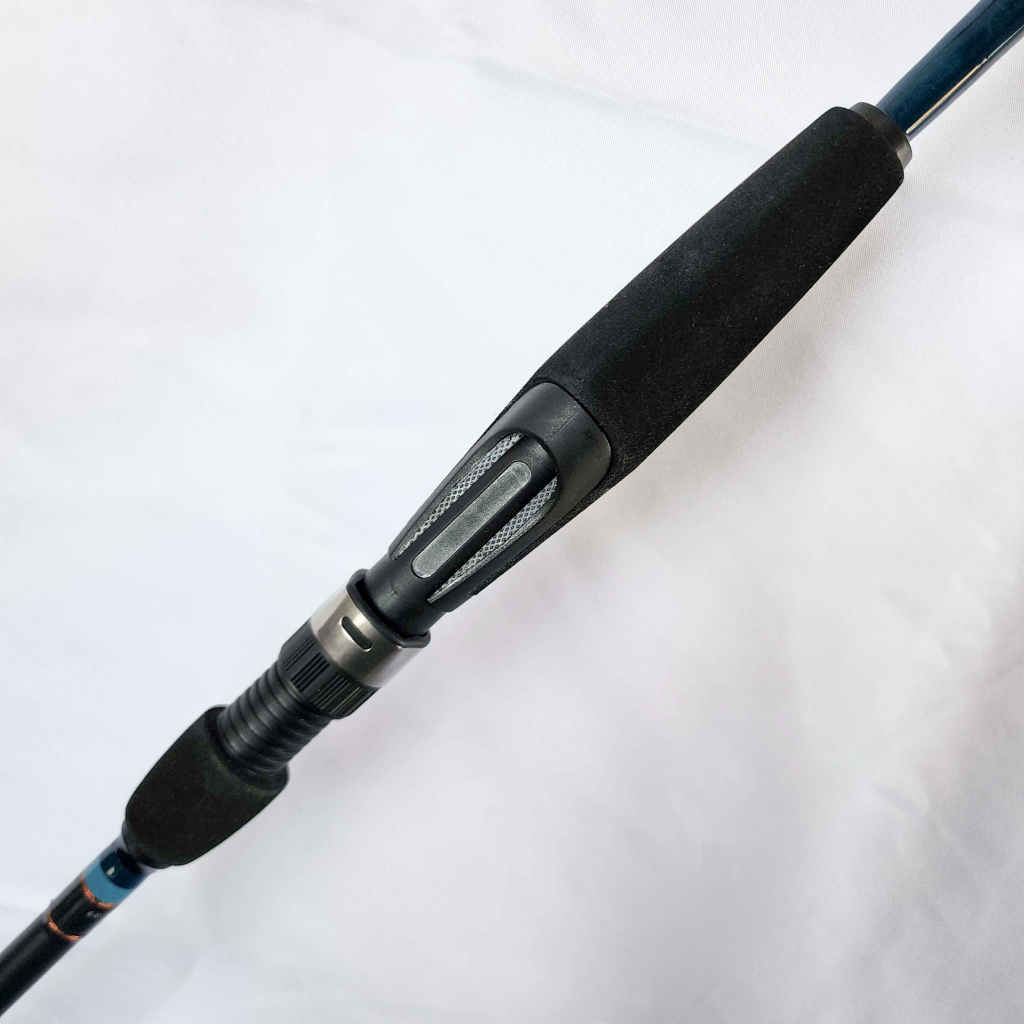
  • EVA vs Cork Fishing Rod Grips: Which Handle Material Is Better?

    Fishing rod handles are one of the most personal parts of any setup. Two of the most common grip materials used in modern fishing rods are EVA foam and cork. Each material offers different advantages depending on fishing style, comfort preference, maintenance expectations, and environment. Understanding the differences between EVA and cork helps anglers choose the right grip for their rod setup.

    What Is EVA Foam?

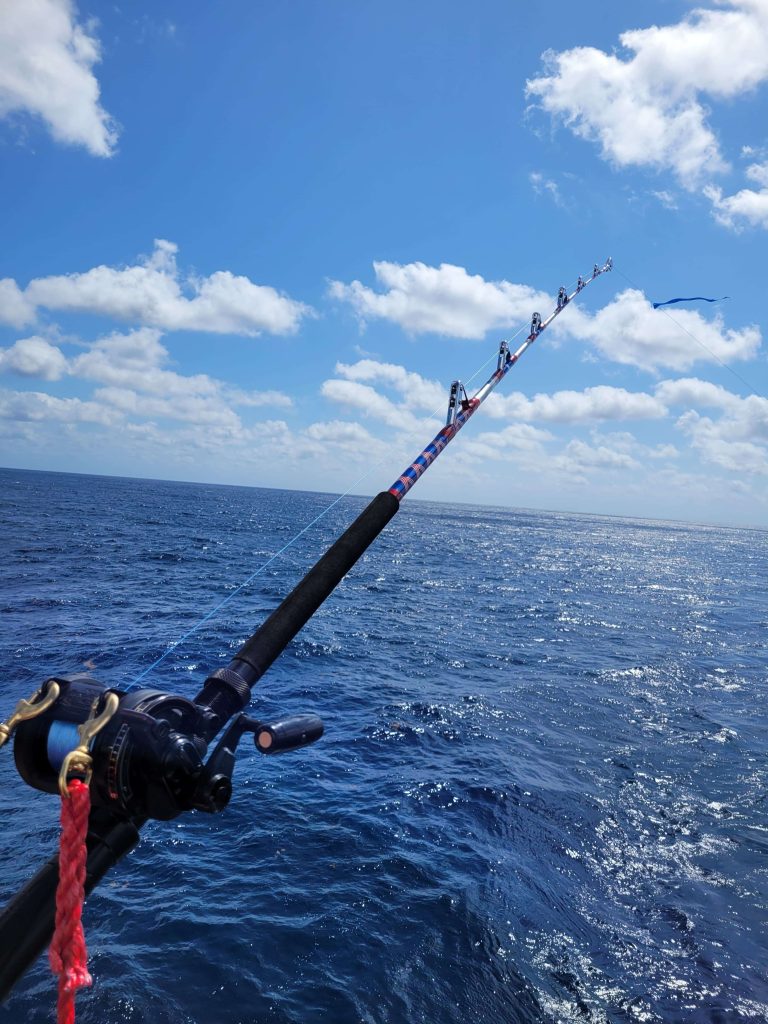
    EVA, or ethylene-vinyl acetate, is a dense foam material commonly used on modern fishing rods. EVA grips are known for their durability, moisture resistance, easy maintenance, and affordability. Because of these characteristics, they are extremely common on offshore rods, saltwater setups, heavy-use rods, and travel rods designed to handle harsh conditions.

    One of the biggest advantages of EVA grips is durability. EVA resists cracking, chipping, water absorption, and salt exposure far better than many traditional materials. This makes it especially popular for anglers fishing in tough environments where rods are regularly exposed to moisture, heat, fish slime, and heavy use.

    EVA is also very low maintenance. Most grips can simply be rinsed clean after a day on the water without requiring additional care or treatment. Many anglers appreciate how well EVA handles mud, bait residue, saltwater, and general wear over time.

    Comfort is another reason many fishermen choose EVA grips. The softer foam compresses slightly under pressure, making long fights with larger fish more comfortable. This is particularly noticeable on offshore rods, jigging setups, and heavier inshore rods where anglers may spend extended periods under load.

    What Is Cork?

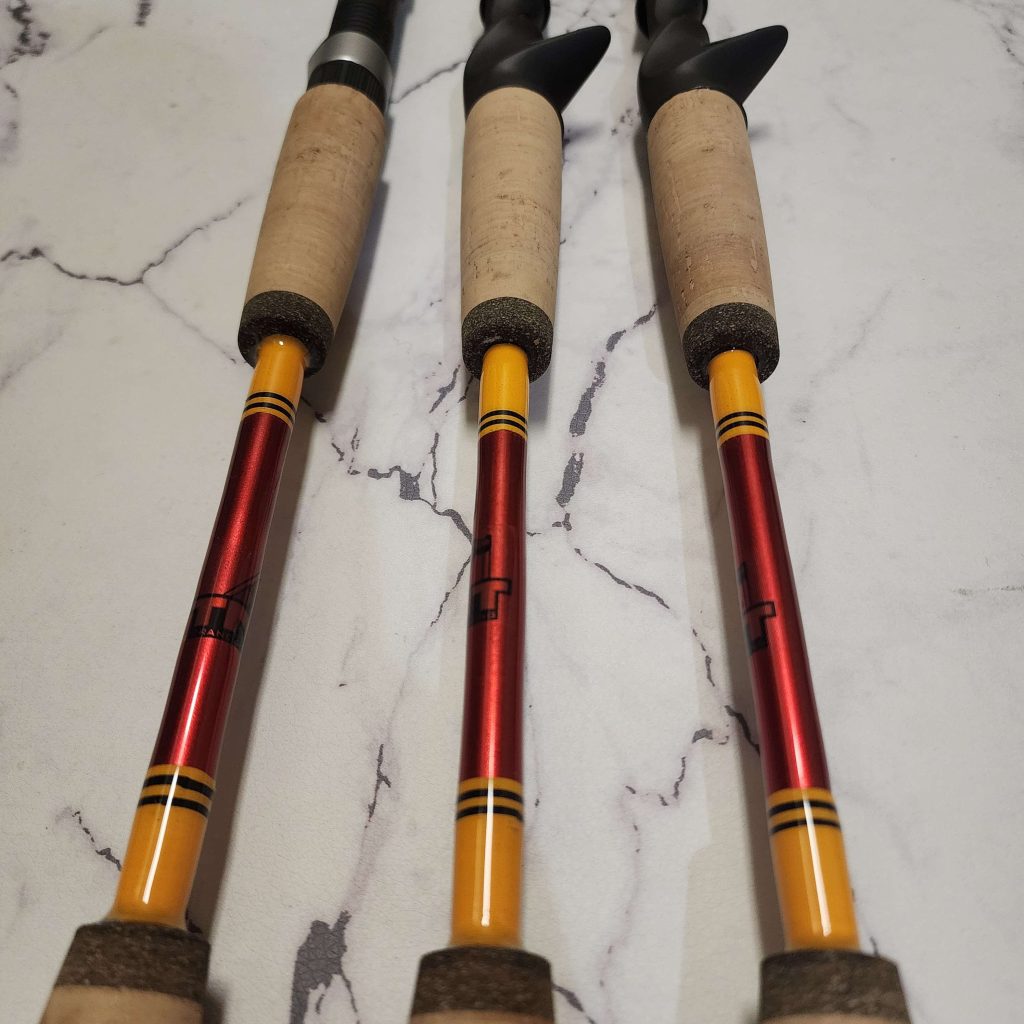
    Cork has been used in fishing rods for decades and remains extremely popular in freshwater and lighter tackle applications. High-quality cork is lightweight and highly sensitive while offering the classic appearance and feel many anglers prefer.

    One of cork’s biggest strengths is sensitivity. Cork transmits vibration exceptionally well, allowing anglers to better detect subtle bites, bottom composition, and lure movement. Because of this, cork is especially common among bass anglers, finesse fishermen, and freshwater applications where feel is extremely important.

    Cork is also lightweight, which helps reduce overall rod weight and improve balance. Many anglers feel this contributes to a more responsive and refined rod feel, especially on lighter setups designed for precision fishing.

    In addition to performance, many fishermen simply prefer the traditional appearance of cork. Cork handles are commonly associated with premium freshwater rods, fly rods, and high-end custom builds where aesthetics matter alongside performance.

    Disadvantages of EVA and Cork

    While EVA is extremely durable, some anglers feel it lacks the sensitivity and premium feel of cork. EVA can also compress over time with heavy use and may appear less refined aesthetically compared to higher-grade cork handles.

    Cork, while lightweight and sensitive, does require more maintenance. Cork stains more easily, can chip or pit over time, and may degrade faster in saltwater environments if not properly cared for. Lower-grade cork can also develop filler loss, creating rough spots or visible gaps after extended use.

    Which Grip Material Is Better?

    Neither EVA nor cork is universally better. The ideal grip material depends largely on fishing style, target species, environment, and personal preference.

    EVA is often preferred for saltwater fishing, offshore use, heavy-use rods, and low-maintenance setups where durability matters most. Cork is commonly favored for freshwater rods, finesse applications, lightweight builds, and situations where sensitivity and traditional aesthetics are prioritized.

    Many custom rods even combine both materials to balance durability, comfort, and appearance.

    Looking for an even lighter and more performance-focused grip material? Read our guide on Carbon Fiber vs Cork Fishing Rod Grips to compare sensitivity, durability, and modern custom rod design.

    Final Thoughts

    Fishing rod grips play a major role in comfort, control, balance, and long-term durability. EVA and cork each offer unique strengths depending on how and where a rod is used.

    For anglers prioritizing durability and easy maintenance, EVA is often the preferred choice. For those prioritizing sensitivity and a classic feel, cork remains one of the most popular handle materials in fishing rod design.

  • Why Your Fishing Rod Feels Wrong (Power and Action Mistakes)

    If your fishing rod feels off—hard to cast, lacking sensitivity, or difficult to control fish—it’s usually not the brand or price. More often, it comes down to choosing the wrong combination of power and action.

    These two factors control how a rod bends, loads, and performs on the water. When they don’t match your setup, everything feels slightly off.

    The Most Common Problem

    A rod can feel “wrong” in a few ways. It might take too much effort to cast, fail to load properly, or feel weak and delayed on hook sets. In some cases, fish are harder to control than expected. Most of the time, this comes down to a mismatch between the rod’s power or action and the lure weight, line, or species being targeted.

    Using Too Much Power

    One of the most common mistakes is choosing a rod that’s too heavy for the setup. Heavier power rods require more force to bend, so when they’re paired with lighter lures or finesse techniques, they never fully load. This results in shorter casts and reduced feel. A medium-heavy rod, for example, can feel “dead” with light tackle because it’s not being used within its intended range.

    Not Enough Power

    On the other side, a rod that’s too light can feel unstable or underpowered. When targeting stronger fish or fishing around structure, lighter rods don’t provide enough backbone to stay in control. This often makes fights more difficult and increases the chances of losing fish. The rod may feel overly flexible or slow to respond when pressure is applied.

    The Wrong Action for Your Style

    Action is just as important as power, but it’s often overlooked. A fast action rod bends near the tip and recovers quickly, making it more responsive and better suited for lighter lures and precise presentations. A moderate or slow action rod bends deeper into the blank, spreading out the load and allowing for smoother casting, especially with heavier setups.

    When the action doesn’t match your fishing style, the rod can feel inconsistent. A fast action rod may feel too stiff when casting heavier lures, while a moderate action rod may feel less responsive when quick hook sets are needed.

    When Power and Action Don’t Work Together

    Even if power and action seem correct on their own, the combination matters. A medium-heavy rod with fast action will feel very different from one with moderate-fast action. One may feel sharp and highly responsive, while the other feels smoother and more forgiving. If the balance isn’t right, the rod won’t feel natural in your hands.

    Real Example: Inshore Fishing

    Inshore fishing is a common place where these issues show up. A medium power rod with fast action works well for lighter lures and smaller species. But when targeting redfish around structure, many anglers step up to medium-heavy power with a moderate-fast action. This combination provides the strength needed to control fish while still allowing the rod to load properly during casts.

    Why This Matters More Than Brand

    Two rods can look nearly identical but perform completely differently depending on their power and action. Understanding how these work together gives you more control over your setup and helps you choose a rod that actually fits how you fish, rather than relying on brand or price.

    Fixing the Problem

    If your rod feels off, start by looking at your setup as a whole. Consider the weight of the lures you’re throwing, the type of line you’re using, and the size and strength of the fish you’re targeting. From there, match your rod’s power and action to those conditions. Small adjustments here can completely change how a rod feels and performs on the water.

    Learn More

    If you are still unsure whether the issue is rod power or rod action, read our Rod Power vs Action Explained guide to better understand how each affects casting, sensitivity, and overall rod performance.

    Grip material can also completely change how a rod feels on the water. Compare Carbon Fiber vs Cork Fishing Rod Grips to learn how handle design affects comfort and sensitivity.

    Guide layout and component choices also influence rod balance and performance. Learn more in our guide on How Fishing Rod Guides Affect Performance.

    Choosing the wrong setup for your target species can make even a quality rod feel awkward. Read What Power Rod for Redfish? to better match your rod to your fishing style and conditions.

  • Fishing Rod Guide Styles Explained: Why Guide Design Matters

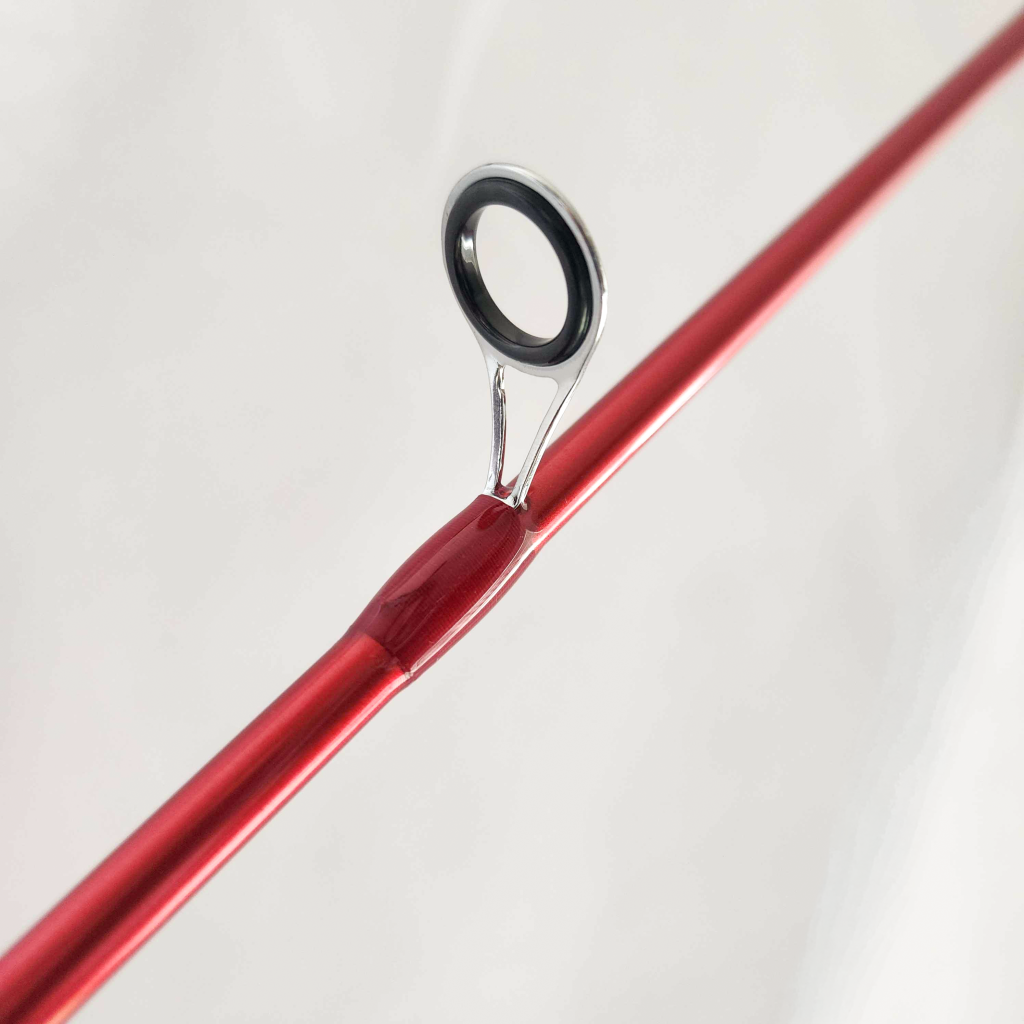
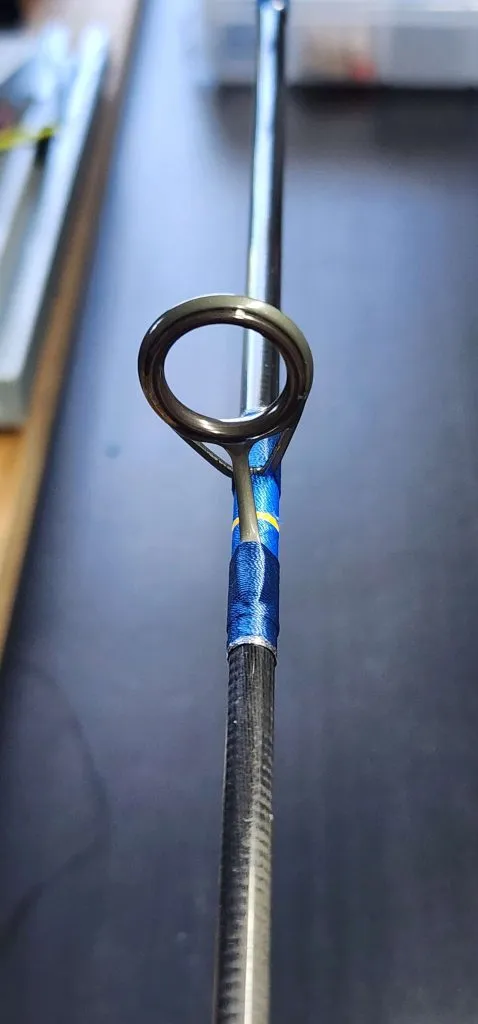
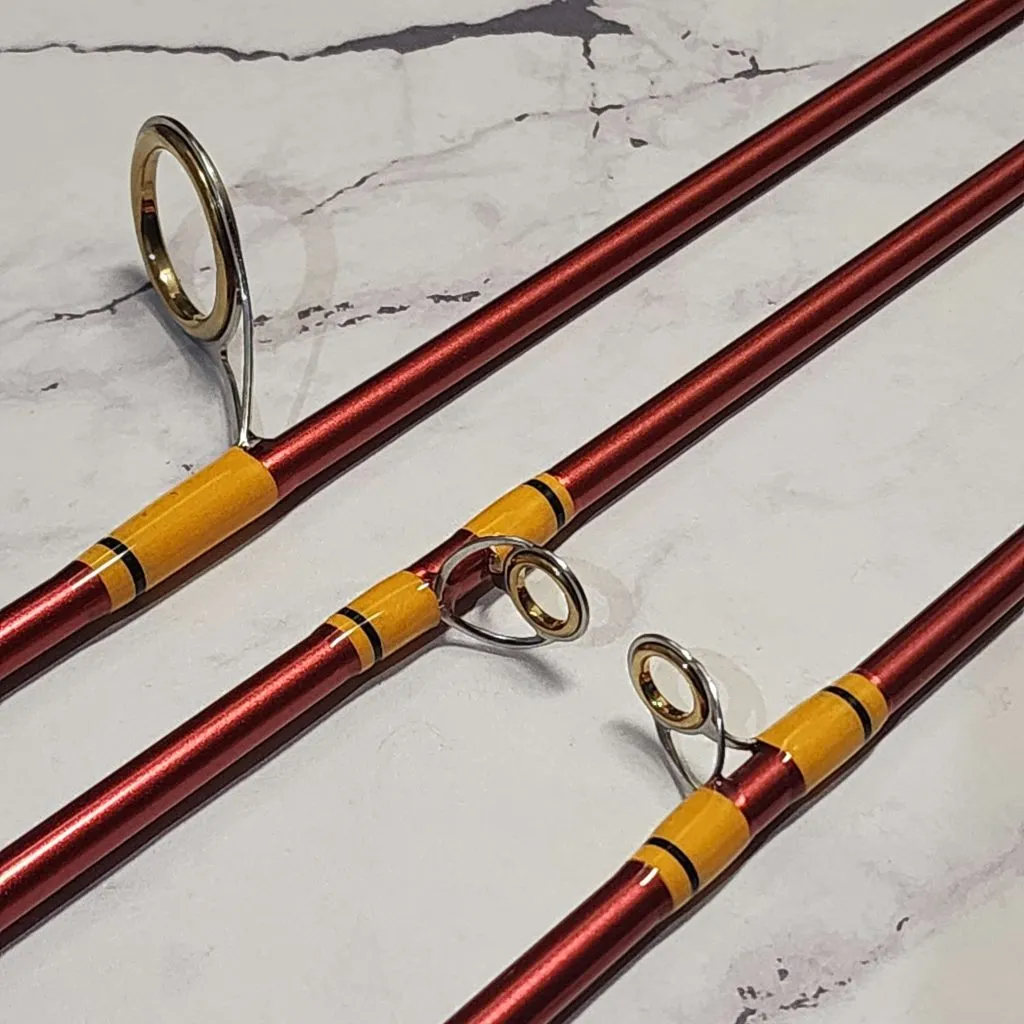
    Fishing rod guides do far more than simply hold fishing line away from the blank. The style, height, material, and frame design of a guide all affect how a rod casts, handles pressure, balances, and performs on the water.

    Whether building a custom fishing rod or upgrading an existing setup, understanding guide styles can help anglers choose the right configuration for their fishing style.

    What Do Rod Guides Actually Do?

    Fishing rod guides control the flow of line from the reel through the rod during casting, retrieving, and fighting fish. While they may seem like simple components, guide placement and design have a major impact on how a rod performs on the water. The guide layout directly affects casting distance, line slap, sensitivity, rod balance, line management, and long-term durability. Even relatively small differences in guide style can noticeably change how a fishing rod feels and performs.

    Common Fishing Rod Guide Styles

    Single Foot Guides

    Single foot guides use one attachment point to secure the guide to the rod blank. Because they use less material, they help reduce overall rod weight and can increase sensitivity by allowing the blank to remain more responsive. These guides are extremely common on freshwater and inshore rods where lightweight performance and sensitivity are prioritized. Single foot guides are often found on bass rods, trout rods, finesse setups, and lighter inshore applications.

    Double Foot Guides

    Double foot guides use two attachment points for increased strength and support. This additional reinforcement helps the guide handle heavier drag pressures and larger fish while improving long-term durability. Double foot guides are commonly used on offshore rods, surf rods, heavy casting setups, and big game applications where strength matters more than minimizing weight.

    High Frame Guides

    High frame guides sit taller above the rod blank and help manage line flow earlier in the guide train. This design is especially important on spinning rods using braided line, where line can otherwise slap against the blank during casting. High frame guides help reduce line slap, improve braid management, and create smoother casting performance. They are commonly used on modern spinning rod layouts designed for inshore and freshwater fishing.

    Micro Guides

    Micro guides use extremely small guide rings to reduce guide train weight and increase blank responsiveness. Because less weight is added to the rod, many anglers feel micro guides improve sensitivity and overall responsiveness. However, micro guides can also create challenges. They may struggle with larger leader knots, ice up faster in cold weather, and require more careful setup to perform correctly. Micro guide systems are most common on specialized bass and finesse rods.

    Guide Materials Matter Too

    Guide performance depends not only on guide style, but also on the materials used in the frame and insert. Common insert materials include aluminum oxide, zirconia, and silicon carbide (SiC), each offering different levels of durability, smoothness, and heat resistance. In saltwater environments, corrosion resistance often becomes one of the most important considerations, leading many anglers to prioritize durable frame materials and protective coatings over ultra-lightweight setups.

    Why Guide Selection Changes Rod Performance

    The wrong guide setup can negatively affect nearly every aspect of rod performance. Poor guide layouts may cause excess line friction, reduced casting efficiency, tip heaviness, reduced sensitivity, and increased line wear. A properly designed guide train allows the rod to load efficiently, cast smoothly, and distribute pressure more evenly throughout the blank. This is one reason custom rod builders often spend significant time selecting and tuning guide layouts for specific applications.

    Choosing The Right Guide Style

    There is no single “best” guide style for every fishing rod. The ideal setup depends on factors such as whether the rod is spinning or casting, the type of fishing line being used, target species, lure weight, rod power, and the fishing environment. For example, inshore braid setups often benefit from high-frame spinning guides to better manage line flow, while offshore rods typically prioritize strength and durability through heavier guide systems. Finesse rods, on the other hand, usually focus on reducing weight and maximizing sensitivity.

    Final Thoughts

    Fishing rod guides are one of the most important performance components on any rod. Guide style affects far more than appearance and can significantly change casting performance, balance, durability, and sensitivity. Understanding the differences between guide styles helps anglers make more informed decisions when buying rods, upgrading components, repairing damaged guides, or planning custom rod builds.

  • How Fishing Rod Guides Affect Performance

    Fishing rod guides are one of the most important components on any rod, yet they’re often overlooked. Most anglers focus on the blank, power, and action, but guides play a major role in how a rod casts, handles line, and performs under load.

    The size, spacing, and quality of the guides all influence how efficiently energy moves through the rod during a cast. When guides are properly selected and aligned, the rod casts smoother, reduces friction, and improves overall control.

    When they aren’t, performance drops in ways that are easy to feel but hard to diagnose.

    Why Guide Size Matters

    Guide size affects how line flows through the rod. Larger guides allow line to move more freely, especially with heavier lines or leader knots, but they also add weight. Smaller guides reduce weight and can improve sensitivity, but they need to be sized correctly to avoid restricting line flow.

    Finding the right balance is key. Too large, and the rod becomes heavier and less responsive. Too small, and casting efficiency suffers.

    Guide Spacing and Load Distribution

    Spacing is where performance really comes together.

    Guides are positioned to distribute load evenly along the blank. When spacing is correct, the rod bends smoothly and consistently under pressure. This improves casting accuracy and prevents stress points that can lead to failure over time.

    Improper spacing creates flat spots or sharp bends in the rod, which reduces performance and puts unnecessary strain on the blank.

    How Guides Affect Casting

    During a cast, energy travels from your hands through the blank and into the line. Guides control how that energy is transferred.

    Well-placed guides keep the line close to the blank, reduce line slap, and allow for a smoother release. This results in longer, more accurate casts with less effort.

    Poor guide layout interrupts that flow, causing friction and reducing distance.

    Why It Matters on the Water

    On the water, the difference shows up in control and consistency. A properly guided rod feels smoother when casting, more responsive when working a lure, and more stable when fighting fish.

    It’s one of those details that doesn’t stand out visually, but makes a noticeable difference in performance.

    To understand how guides work with the blank itself, read what is the spine of a fishing rod.

    If you’re fishing locally, check out custom fishing rods in Houston, TX to see how these builds come together for Gulf Coast conditions.

  • What Is the Spine of a Fishing Rod and Why It Matters

    If you’ve ever picked up two rods with similar specs and noticed that one just feels better, more stable, or more responsive, there’s a good chance the difference comes down to how the rod was built. One of the most important and most overlooked parts of rod building is the spine.

    The spine of a fishing rod is a natural characteristic of the blank that forms during manufacturing. It affects how the rod bends, loads, and recovers under pressure. When it’s ignored, performance suffers. When it’s used correctly, everything feels more controlled and consistent.

    What the Spine Actually Is

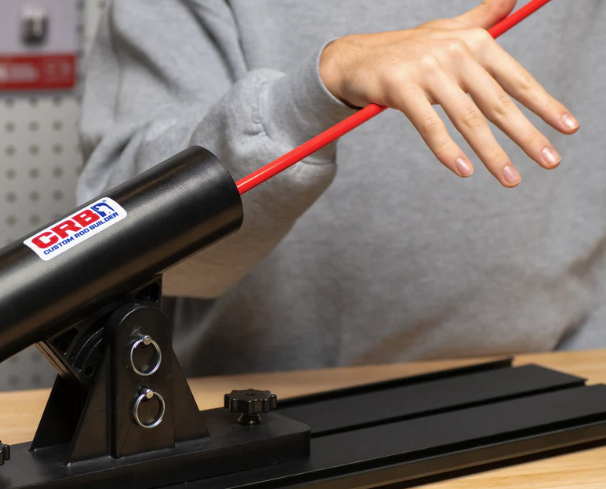
    Rod blanks are made by rolling layers of graphite or fiberglass material around a mandrel. Because those layers overlap and compress during curing, the blank develops a natural direction where it prefers to bend. That direction is what builders refer to as the spine.

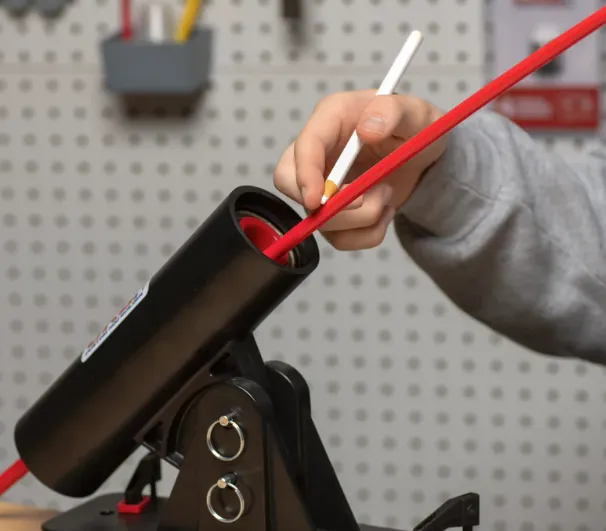
    If you apply pressure to a blank and rotate it slowly, you’ll feel it “snap” into a position where it wants to settle. That position isn’t random. It’s the most stable axis of the blank, and it’s where the rod performs most consistently under load.

    Why the Spine Matters

    When a rod is built without considering the spine, it can twist slightly when loaded. That twist might not be obvious at first, but it shows up in ways that affect how the rod performs on the water.

    A rod that isn’t aligned with its spine can feel less stable during casting, less accurate when placing lures, and less controlled when fighting fish. Over time, that inconsistency becomes noticeable, especially when you’re fishing in conditions where precision matters.

    When a rod is built on the spine, it tracks more naturally. The blank loads and unloads the way it was designed to, which improves casting consistency, keeps the rod stable under pressure, and gives you a more connected feel to what’s happening at the end of your line.

    Why Most Factory Rods Ignore It

    Spine alignment takes time. It requires individually checking each blank, finding its natural orientation, and building around it. That doesn’t scale well in a production environment.

    Most factory rods are built quickly and in high volume, which means components are aligned for speed and consistency in manufacturing, not for performance in the field. As a result, many rods leave the factory without ever being built on their true spine.

    That doesn’t mean they won’t work, but it does mean they aren’t optimized.

    How It Affects Your Fishing

    On the water, the difference shows up in subtle but important ways. A properly aligned rod feels more predictable. Casts land where you expect them to. The rod loads smoothly when working a lure and responds cleanly when setting the hook.

    When fighting a fish, the rod stays stable instead of trying to roll or twist. That stability translates into better control, especially when you’re dealing with structure, current, or strong fish.

    It’s not about making the rod flashy. It’s about making it reliable.

    How We Build Around the Spine

    Every rod we build is checked for its natural spine before any components are installed. Once that orientation is identified, the guides and reel seat are aligned to match how the blank wants to perform under load.

    This ensures that the rod works with its natural structure instead of against it. The result is a build that feels more balanced, more controlled, and more consistent every time it’s used.

    The Bottom Line

    The spine of a fishing rod isn’t something you see, but it’s something you feel. It’s one of those details that separates a rod that simply works from one that performs the way it should.

    If you’re investing in a rod you plan to fish with regularly, it makes sense to have it built correctly from the start.

    If you want to understand how this fits into overall rod performance, read our guide on rod power vs action explained.

  • Spinning vs Casting Rod for Inshore Fishing

    Choosing between a spinning rod vs casting rod for inshore fishing is one of the most common decisions anglers face. It’s also one of the most misunderstood.

    Both setups are capable of catching redfish, trout, and other inshore species, but they perform differently depending on how you fish, what you’re throwing, and the conditions you’re in. Understanding those differences is what separates a setup that works from one that constantly feels off.

    The Core Difference

    The main difference between spinning and casting rods comes down to how the reel is mounted and how the line flows during a cast.

    A spinning rod uses a reel mounted underneath the rod, allowing line to flow freely off the spool. A casting rod places the reel on top, giving the angler more direct control over the line during a cast and retrieve.

    That one difference affects everything from casting distance to accuracy to how much control you have over a fish.

    When a Spinning Rod Makes More Sense

    Spinning rods are often the starting point for inshore fishing, but they’re not just for beginners. They remain one of the most versatile tools on the water.

    They perform best in situations where simplicity, consistency, and lighter presentations matter more than raw control. If you’re fishing open flats, covering water, or working lighter lures, a spinning setup tends to feel more natural and forgiving.

    In real-world conditions, spinning rods are commonly used for:

    • open water and flats
    • lighter lures such as soft plastics
    • trout and smaller redfish
    • windy conditions where line control becomes more difficult

    The biggest advantage is how easy they are to use. You can focus on fishing instead of managing your equipment, which is especially valuable when conditions aren’t perfect.

    When a Casting Rod Has the Advantage

    Casting rods are built around control. Once you understand how to use them, they offer a level of precision and power that spinning setups can’t quite match.

    They shine in situations where placement matters and where fish need to be controlled quickly after the hookset. Around docks, jetties, rocks, or any kind of structure, that added control becomes a major advantage.

    Casting rods are most commonly used for:

    • fishing tight structure like docks and rocks
    • targeting larger redfish
    • working heavier lures
    • situations where precise casting is critical

    They do require more skill to use effectively, but once dialed in, they give you a more direct connection to both your lure and the fish.

    Spinning vs Casting for Redfish

    Both spinning and casting rods can be effective for redfish, but they serve different roles depending on the environment.

    In open water or on flats, spinning rods are often the better choice. They allow for longer casts, lighter presentations, and a more forgiving experience overall. This makes them ideal for covering water and working subtle bites.

    In contrast, when fishing around structure or targeting larger fish, casting rods tend to perform better. They provide more control during the fight, making it easier to turn fish before they reach cover.

    Inshore fishing often involves both scenarios, which is why many anglers eventually use both setups rather than choosing one over the other.

    How Rod Power and Action Fit In

    The choice between spinning and casting is only part of the equation. Power and action play just as big of a role in how your rod performs.

    A spinning rod that’s too light will struggle in structure. A casting rod that’s too heavy can lose sensitivity and casting efficiency. Matching the right power and action to your setup is what makes everything work together.

    If you’re unsure how these factors interact, it’s worth understanding how rod power vs action affects performance, especially for inshore fishing where conditions change quickly.

    Common Misconceptions

    A lot of confusion around spinning vs casting rods comes from a few common assumptions.

    One of the biggest is that spinning rods are only for beginners. While they are easier to learn, they remain a primary tool for experienced anglers because of their versatility.

    Another misconception is that casting rods are always better. They’re not. They’re better in specific situations, particularly where control and precision matter, but they can be limiting in others.

    There’s also the idea that you have to choose one or the other. In reality, most anglers who fish regularly end up using both, depending on the conditions.

    Which One Should You Choose?

    The best choice comes down to how and where you fish.

    If your fishing is mostly in open water, with lighter lures and less structure, a spinning rod will likely give you the best overall experience. It’s simple, reliable, and effective across a wide range of conditions.

    If you spend more time fishing around structure, targeting larger fish, or working heavier setups, a casting rod will give you more control and better performance in those situations.

    For many anglers, the most practical approach is to start with spinning gear and add a casting setup as their fishing becomes more specialized.

    Final Thoughts

    Spinning and casting rods are not competing options—they’re tools designed for different purposes.

    Understanding when to use each one is what allows you to adapt to changing conditions and fish more effectively. The right choice isn’t about preference alone, it’s about using the setup that performs best for the situation in front of you.

    Looking for the Right Inshore Rod?

    If you’re looking for rods designed for real inshore conditions, built with the right balance of control, sensitivity, and durability:

  • Rod Power vs Action Explained

    Rod Power vs Action Explained

    What Is Rod Power?

    Rod power refers to the amount of force required to bend a rod at its designed action point, and it plays a major role in how a rod handles fish, line, and lure weight. Power ratings typically range from ultra-light to heavy, with lighter rods bending more easily and heavier rods requiring more pressure to load.

    These ratings are directly tied to a rod’s recommended line and lure range, helping anglers match their setup to the conditions they’re fishing. A common way to choose the right power is by the size of the fish being targeted—lighter power rods are better suited for smaller species like panfish and trout, while medium power rods offer versatility for species like bass. For inshore fishing, especially when targeting redfish, medium-heavy power is often the preferred choice because it provides enough backbone to control strong fish, particularly around structure, while still maintaining sensitivity. In more demanding environments like surf fishing, even heavier power is typically needed to handle larger weights and tougher conditions.

    For example, a rod labeled 6’0” Light, 4–8 lb line, 1/16–1/4 oz lure indicates a 6-foot rod with light power, designed to perform best with 4–8 pound test line and lightweight lures between 1/16 and 1/4 ounce. This rating helps ensure the rod loads properly when casting and performs as intended when fighting fish.

    It ranges from ultra-light to heavy, and directly affects how the rod handles fish, line, and lure weight.

    fisherman casting rod into sea

    In simple terms:

    • Light power bends easily
    • Heavy power requires more force to bend

    Common Power Ratings

    • Ultra light (UL) → Small fish, finesse techniques
    • Light (L) → panfish, trout
    • Medium (M) → versatile, general-purpose fishing
    • Medium-Heavy (MH) → inshore, bass, redfish
    • Heavy (H) → large fish, heavy cover

    Why Power Matters

    Power determines:

    • How much pressure you can apply to a fish
    • The size of fish you can handle
    • The type of lures you can throw

    What Is Rod Action?

    What Is Rod Action?
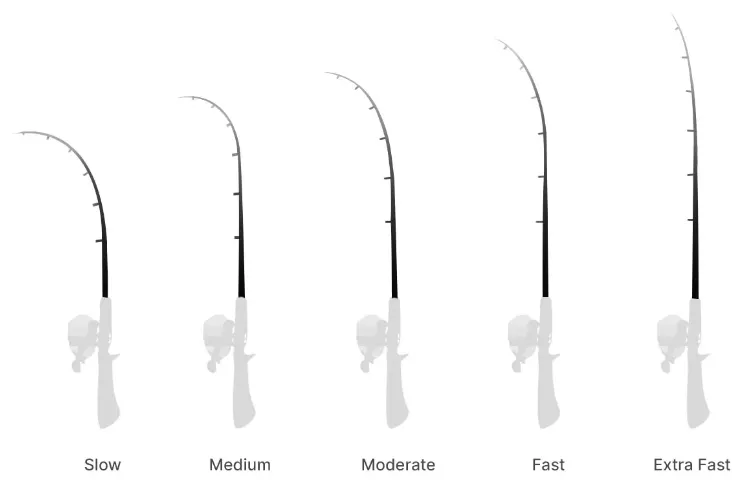
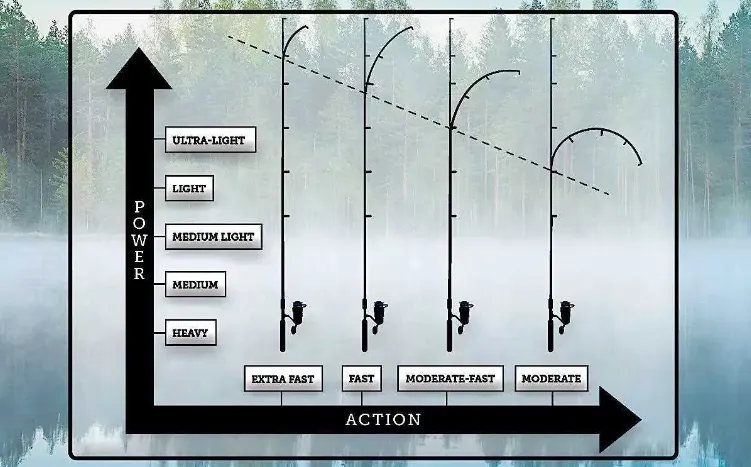
    Rod action describes where the rod bends when pressure is applied.

    It ranges from slow to extra fast, with slower actions bending deeper toward the handle, and faster actions bending closer to the tip.

    The terms “slow” and “fast” don’t just describe where the rod bends—they also reflect how quickly the rod recovers after being loaded. In other words, how quickly it returns to its original position once the pressure is released.

    Rod action plays a major role in performance, especially when it comes to casting. When you load a rod during a cast, slower actions tend to handle heavier lures more smoothly because they distribute that load across a larger portion of the blank. Faster actions, on the other hand, are better suited for lighter setups and more precise casting.

    Common Action Types

    • Slow Action → bends throughout the entire rod
    • Moderate Action → bends through the middle
    • Fast Action → bends mostly near the tip
    • Extra Fast → bends only at the very tip

    A fast action rod gives:

    • Quick response
    • Strong hook sets
    • Better feel

    A moderate action rod gives:

    • More flex
    • Better shock absorption
    • Smoother fights

    Power vs Action: The Key Difference

    This is the simplest way to think about it:

    • Power = how much it bends
    • Action = where it bends

    They work together, but they control different aspects of performance.

    This is the simplest way to think about it:

    • Power = how much it bends
    • Action = where it bends

    They work together, but they control different aspects of performance.

    This is the simplest way to think about it:

    • Power = how much it bends
    • Action = where it bends

    They work together, but they control different aspects of performance.

    Medium + Fast

    • Versatile
    • Good sensitivity
    • Common all-around setup

    Medium-Heavy + Moderate-Fast

    • Stronger backbone
    • Still flexible enough for fighting fish
    • Ideal for inshore fishing

    Light + Fast

    • Very sensitive
    • Great for finesse techniques

    Inshore / Redfish:

    • Medium-Heavy power
    • Moderate-Fast action

    Trout / Panfish:

    • Light to Medium power
    • Fast action

    General Use:

    • Medium power
    • Fast action

    Why This Matters More Than Brand Names

    Many anglers focus on brand or price, but power and action have a bigger impact on how a rod performs.

    Two rods can look similar—but feel completely different on the water depending on how they’re built.


    Final Thoughts

    Understanding rod power and action gives you more control over your setup and helps you choose a rod that actually matches your fishing style.

    Once you dial in the right combination, you’ll notice:

    • Better casting
    • More consistent hook sets
    • More control during fights