Tag: fishing rod guide

  • 5 Mistakes People Make Buying Fishing Rods

    Buying a fishing rod seems simple at first. Most anglers walk into a tackle shop, pick up a rod that “feels good,” and assume that is enough. In reality, choosing the wrong rod can make casting harder, reduce sensitivity, hurt hooksets, and make fishing far less enjoyable than it should be.

    Many problems anglers experience on the water actually begin with poor rod selection long before the first cast is made.
    Choosing Rod Power Based Only on Fish Size

    One of the biggest mistakes anglers make is selecting rod power based only on the size of the fish they want to catch.

    A heavier rod does not automatically mean better performance. Rod power affects casting distance, lure control, sensitivity, and how efficiently a rod loads during a cast. Using a rod that is too heavy for the lure being thrown often makes the setup feel stiff and unresponsive.

    For example, many anglers targeting redfish immediately jump to heavy-power rods when a medium-light or medium setup may actually cast better and feel more balanced for the techniques being used.

    Matching rod power to lure weight and fishing style is often more important than simply choosing the strongest rod possible.

    Ignoring Rod Action

    Many anglers confuse rod power and rod action, even though they affect completely different aspects of performance.

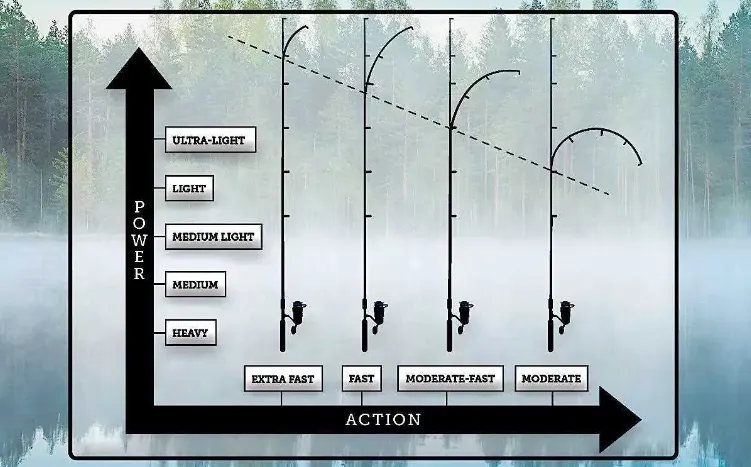
    Rod power describes how much force it takes to bend the rod. Rod action describes where the rod bends along the blank.

    A fast-action rod feels crisp and responsive, making it ideal for single-hook lures and techniques requiring quick hooksets. Moderate-action rods bend deeper into the blank and often cast treble-hook lures more smoothly.

    Choosing the wrong action can make a rod feel awkward, inaccurate, or poorly balanced even if the power itself is correct.

    Buying Based on Brand Alone

    Expensive or popular brands do not automatically guarantee the best rod for a specific application.

    Many anglers buy rods based entirely on logos, marketing, or online hype without considering how the rod actually fits their fishing style. A rod that works perfectly for one angler may feel completely wrong for another depending on lure choice, casting style, or target species.

    The best fishing rod is not always the most expensive one. It is the rod that properly matches the intended application.

    Overlooking Handle and Grip Design

    Handle design has a massive effect on how a rod feels during long days of fishing, yet many anglers barely pay attention to it.

    Grip material, grip length, reel seat placement, and overall balance all influence comfort and sensitivity. A rod that feels tip-heavy or uncomfortable in the hand can quickly become tiring, even if the blank itself performs well.

    This is one reason many custom rod builders place heavy emphasis on grip configuration and overall rod balance rather than focusing only on the blank.

    Buying a Rod That Does Too Much

    Many anglers search for a “do everything” rod capable of handling every lure and technique. While versatile rods exist, trying to cover too many applications with one setup usually means sacrificing performance somewhere else.

    A rod designed for throwing lightweight soft plastics may not perform nearly as well with heavier topwaters or live bait rigs. Likewise, a rod built for heavy jigging may feel terrible when throwing smaller finesse presentations.

    Purpose-built rods almost always perform better than overly generalized setups.

    Final Thoughts

    The wrong fishing rod can make even good equipment feel frustrating on the water. Many common rod problems come from mismatched power, incorrect action, poor balance, or trying to force one setup into every situation.

    Understanding how rod design affects performance helps anglers choose setups that cast better, feel more responsive, and ultimately make fishing more enjoyable.
  • What Is the Best Rod for Inshore Fishing?

    Finding the best rod for inshore fishing can feel overwhelming. There are countless options, different opinions, and a lot of conflicting advice.

    The reality is that most inshore fishing setups fall within a fairly narrow range. Once you understand what actually matters, choosing the right rod becomes much simpler.

    The Short Answer

    For most inshore fishing situations:

    👉 A 7’ medium-heavy rod with a moderate-fast action is the most versatile choice

    This setup works well for redfish, trout, and a wide range of inshore conditions.

    Why There Is No Single “Best” Rod

    The idea of a single “best” rod is misleading because inshore fishing covers a wide range of environments.

    Fishing open flats is very different from fishing around docks or jetties. Lighter lures require a different feel than heavier setups. Smaller fish behave differently than larger, more aggressive ones.

    What you’re really choosing is a rod that matches how and where you fish.

    The Three Things That Matter Most

    When choosing a rod for inshore fishing, three factors matter more than anything else: power, action, and length.

    Power

    Rod power determines how much pressure you can apply to a fish. For inshore fishing, medium and medium-heavy rods are the most common.

    Medium rods are better for lighter setups and smaller fish, while medium-heavy rods give you more control, especially around structure or when targeting redfish.

    If you’re unsure how rod power works, it’s worth understanding how rod power vs action affects performance.

    Action

    Rod action controls where the rod bends and how it responds under load.

    A moderate-fast action is one of the most balanced choices for inshore fishing because it provides both flexibility and control. It allows the rod to absorb runs while still delivering solid hook sets.

    This balance becomes especially important when dealing with strong fish in changing conditions.

    Length

    Rod length affects casting distance, accuracy, and control.

    Most inshore rods fall between 6’6” and 7’6”, with 7’ being the most versatile option. It provides a balance between distance and accuracy without feeling too long or too short.

    Matching Your Rod to Real Conditions

    The best rod depends on where you fish and how you fish.

    In open water or on flats, lighter setups often perform well. A medium rod can provide better sensitivity and a smoother overall feel.

    Around structure such as docks, rocks, or jetties, a medium-heavy rod becomes more important. It gives you the ability to control fish before they reach cover, which can make the difference between landing a fish and losing it.

    If you fish a mix of environments, medium-heavy remains the safest and most versatile option.

    Spinning vs Casting Rods

    Another factor to consider is whether to use a spinning or casting setup.

    Spinning rods are easier to use and tend to perform better with lighter lures and in open water. Casting rods provide more control and are often preferred when fishing around structure or using heavier setups.

    If you’re unsure which is right for you, it helps to understand the differences between spinning vs casting rods for inshore fishing, especially as your fishing style develops.

    Common Mistakes When Choosing a Rod

    A lot of anglers run into the same issues when choosing an inshore rod.

    One of the most common mistakes is going too light. While lighter rods feel more sensitive, they can struggle to control fish in real conditions.

    Another mistake is going too heavy. This can reduce sensitivity and make casting less efficient, especially with lighter lures.

    There’s also a tendency to focus too much on brand or price. While those things matter, they don’t replace choosing the right power, action, and length for your fishing style.

    Why Build Quality Matters

    Once you have the right specifications, build quality becomes the next factor.

    A well-built rod will feel more balanced, more responsive, and more consistent under load. This comes from the quality of the blank, the components used, and how everything is put together.

    Blanks such as Batson Rainshadow are commonly used in inshore rods because they provide reliable strength and consistent performance, especially when paired with quality construction.

    Final Thoughts

    The best rod for inshore fishing isn’t about finding the most expensive option or the most popular brand. It’s about finding a setup that works in real conditions.

    For most anglers, that comes down to:

    👉 A 7’ medium-heavy rod with a moderate-fast action

    It’s a setup that balances sensitivity, control, and versatility, making it one of the most reliable choices for inshore fishing.

    Looking for an Inshore Rod?

    If you’re looking for a rod built with real-world performance in mind, designed to handle inshore conditions without compromise:

  • Spinning vs Casting Rod for Inshore Fishing

    Choosing between a spinning rod vs casting rod for inshore fishing is one of the most common decisions anglers face. It’s also one of the most misunderstood.

    Both setups are capable of catching redfish, trout, and other inshore species, but they perform differently depending on how you fish, what you’re throwing, and the conditions you’re in. Understanding those differences is what separates a setup that works from one that constantly feels off.

    The Core Difference

    The main difference between spinning and casting rods comes down to how the reel is mounted and how the line flows during a cast.

    A spinning rod uses a reel mounted underneath the rod, allowing line to flow freely off the spool. A casting rod places the reel on top, giving the angler more direct control over the line during a cast and retrieve.

    That one difference affects everything from casting distance to accuracy to how much control you have over a fish.

    When a Spinning Rod Makes More Sense

    Spinning rods are often the starting point for inshore fishing, but they’re not just for beginners. They remain one of the most versatile tools on the water.

    They perform best in situations where simplicity, consistency, and lighter presentations matter more than raw control. If you’re fishing open flats, covering water, or working lighter lures, a spinning setup tends to feel more natural and forgiving.

    In real-world conditions, spinning rods are commonly used for:

    • open water and flats
    • lighter lures such as soft plastics
    • trout and smaller redfish
    • windy conditions where line control becomes more difficult

    The biggest advantage is how easy they are to use. You can focus on fishing instead of managing your equipment, which is especially valuable when conditions aren’t perfect.

    When a Casting Rod Has the Advantage

    Casting rods are built around control. Once you understand how to use them, they offer a level of precision and power that spinning setups can’t quite match.

    They shine in situations where placement matters and where fish need to be controlled quickly after the hookset. Around docks, jetties, rocks, or any kind of structure, that added control becomes a major advantage.

    Casting rods are most commonly used for:

    • fishing tight structure like docks and rocks
    • targeting larger redfish
    • working heavier lures
    • situations where precise casting is critical

    They do require more skill to use effectively, but once dialed in, they give you a more direct connection to both your lure and the fish.

    Spinning vs Casting for Redfish

    Both spinning and casting rods can be effective for redfish, but they serve different roles depending on the environment.

    In open water or on flats, spinning rods are often the better choice. They allow for longer casts, lighter presentations, and a more forgiving experience overall. This makes them ideal for covering water and working subtle bites.

    In contrast, when fishing around structure or targeting larger fish, casting rods tend to perform better. They provide more control during the fight, making it easier to turn fish before they reach cover.

    Inshore fishing often involves both scenarios, which is why many anglers eventually use both setups rather than choosing one over the other.

    How Rod Power and Action Fit In

    The choice between spinning and casting is only part of the equation. Power and action play just as big of a role in how your rod performs.

    A spinning rod that’s too light will struggle in structure. A casting rod that’s too heavy can lose sensitivity and casting efficiency. Matching the right power and action to your setup is what makes everything work together.

    If you’re unsure how these factors interact, it’s worth understanding how rod power vs action affects performance, especially for inshore fishing where conditions change quickly.

    Common Misconceptions

    A lot of confusion around spinning vs casting rods comes from a few common assumptions.

    One of the biggest is that spinning rods are only for beginners. While they are easier to learn, they remain a primary tool for experienced anglers because of their versatility.

    Another misconception is that casting rods are always better. They’re not. They’re better in specific situations, particularly where control and precision matter, but they can be limiting in others.

    There’s also the idea that you have to choose one or the other. In reality, most anglers who fish regularly end up using both, depending on the conditions.

    Which One Should You Choose?

    The best choice comes down to how and where you fish.

    If your fishing is mostly in open water, with lighter lures and less structure, a spinning rod will likely give you the best overall experience. It’s simple, reliable, and effective across a wide range of conditions.

    If you spend more time fishing around structure, targeting larger fish, or working heavier setups, a casting rod will give you more control and better performance in those situations.

    For many anglers, the most practical approach is to start with spinning gear and add a casting setup as their fishing becomes more specialized.

    Final Thoughts

    Spinning and casting rods are not competing options—they’re tools designed for different purposes.

    Understanding when to use each one is what allows you to adapt to changing conditions and fish more effectively. The right choice isn’t about preference alone, it’s about using the setup that performs best for the situation in front of you.

    Looking for the Right Inshore Rod?

    If you’re looking for rods designed for real inshore conditions, built with the right balance of control, sensitivity, and durability:

  • Rod Power vs Action Explained

    Rod Power vs Action Explained

    What Is Rod Power?

    Rod power refers to the amount of force required to bend a rod at its designed action point, and it plays a major role in how a rod handles fish, line, and lure weight. Power ratings typically range from ultra-light to heavy, with lighter rods bending more easily and heavier rods requiring more pressure to load.

    These ratings are directly tied to a rod’s recommended line and lure range, helping anglers match their setup to the conditions they’re fishing. A common way to choose the right power is by the size of the fish being targeted—lighter power rods are better suited for smaller species like panfish and trout, while medium power rods offer versatility for species like bass. For inshore fishing, especially when targeting redfish, medium-heavy power is often the preferred choice because it provides enough backbone to control strong fish, particularly around structure, while still maintaining sensitivity. In more demanding environments like surf fishing, even heavier power is typically needed to handle larger weights and tougher conditions.

    For example, a rod labeled 6’0” Light, 4–8 lb line, 1/16–1/4 oz lure indicates a 6-foot rod with light power, designed to perform best with 4–8 pound test line and lightweight lures between 1/16 and 1/4 ounce. This rating helps ensure the rod loads properly when casting and performs as intended when fighting fish.

    It ranges from ultra-light to heavy, and directly affects how the rod handles fish, line, and lure weight.

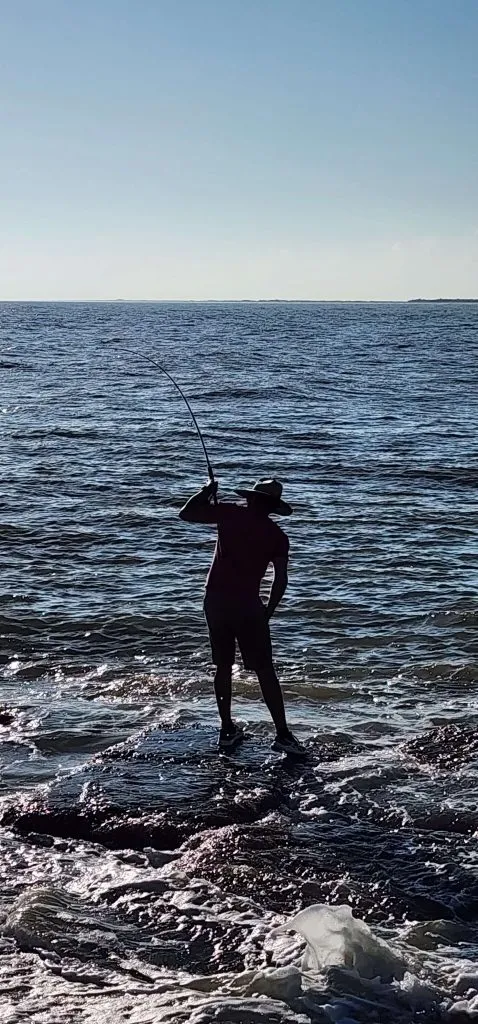
    fisherman casting rod into sea

    In simple terms:

    • Light power bends easily
    • Heavy power requires more force to bend

    Common Power Ratings

    • Ultra light (UL) → Small fish, finesse techniques
    • Light (L) → panfish, trout
    • Medium (M) → versatile, general-purpose fishing
    • Medium-Heavy (MH) → inshore, bass, redfish
    • Heavy (H) → large fish, heavy cover

    Why Power Matters

    Power determines:

    • How much pressure you can apply to a fish
    • The size of fish you can handle
    • The type of lures you can throw

    What Is Rod Action?

    What Is Rod Action?
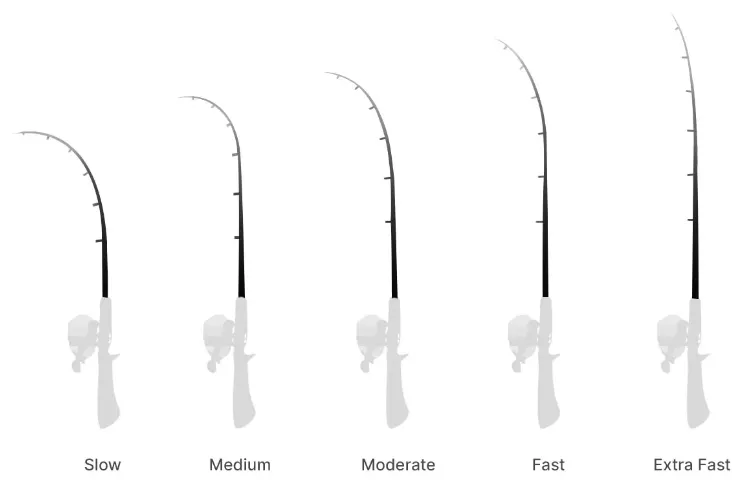
    Rod action describes where the rod bends when pressure is applied.

    It ranges from slow to extra fast, with slower actions bending deeper toward the handle, and faster actions bending closer to the tip.

    The terms “slow” and “fast” don’t just describe where the rod bends—they also reflect how quickly the rod recovers after being loaded. In other words, how quickly it returns to its original position once the pressure is released.

    Rod action plays a major role in performance, especially when it comes to casting. When you load a rod during a cast, slower actions tend to handle heavier lures more smoothly because they distribute that load across a larger portion of the blank. Faster actions, on the other hand, are better suited for lighter setups and more precise casting.

    Common Action Types

    • Slow Action → bends throughout the entire rod
    • Moderate Action → bends through the middle
    • Fast Action → bends mostly near the tip
    • Extra Fast → bends only at the very tip

    A fast action rod gives:

    • Quick response
    • Strong hook sets
    • Better feel

    A moderate action rod gives:

    • More flex
    • Better shock absorption
    • Smoother fights

    Power vs Action: The Key Difference

    This is the simplest way to think about it:

    • Power = how much it bends
    • Action = where it bends

    They work together, but they control different aspects of performance.

    This is the simplest way to think about it:

    • Power = how much it bends
    • Action = where it bends

    They work together, but they control different aspects of performance.

    This is the simplest way to think about it:

    • Power = how much it bends
    • Action = where it bends

    They work together, but they control different aspects of performance.

    Medium + Fast

    • Versatile
    • Good sensitivity
    • Common all-around setup

    Medium-Heavy + Moderate-Fast

    • Stronger backbone
    • Still flexible enough for fighting fish
    • Ideal for inshore fishing

    Light + Fast

    • Very sensitive
    • Great for finesse techniques

    Inshore / Redfish:

    • Medium-Heavy power
    • Moderate-Fast action

    Trout / Panfish:

    • Light to Medium power
    • Fast action

    General Use:

    • Medium power
    • Fast action

    Why This Matters More Than Brand Names

    Many anglers focus on brand or price, but power and action have a bigger impact on how a rod performs.

    Two rods can look similar—but feel completely different on the water depending on how they’re built.


    Final Thoughts

    Understanding rod power and action gives you more control over your setup and helps you choose a rod that actually matches your fishing style.

    Once you dial in the right combination, you’ll notice:

    • Better casting
    • More consistent hook sets
    • More control during fights